Practical Life at School and Home
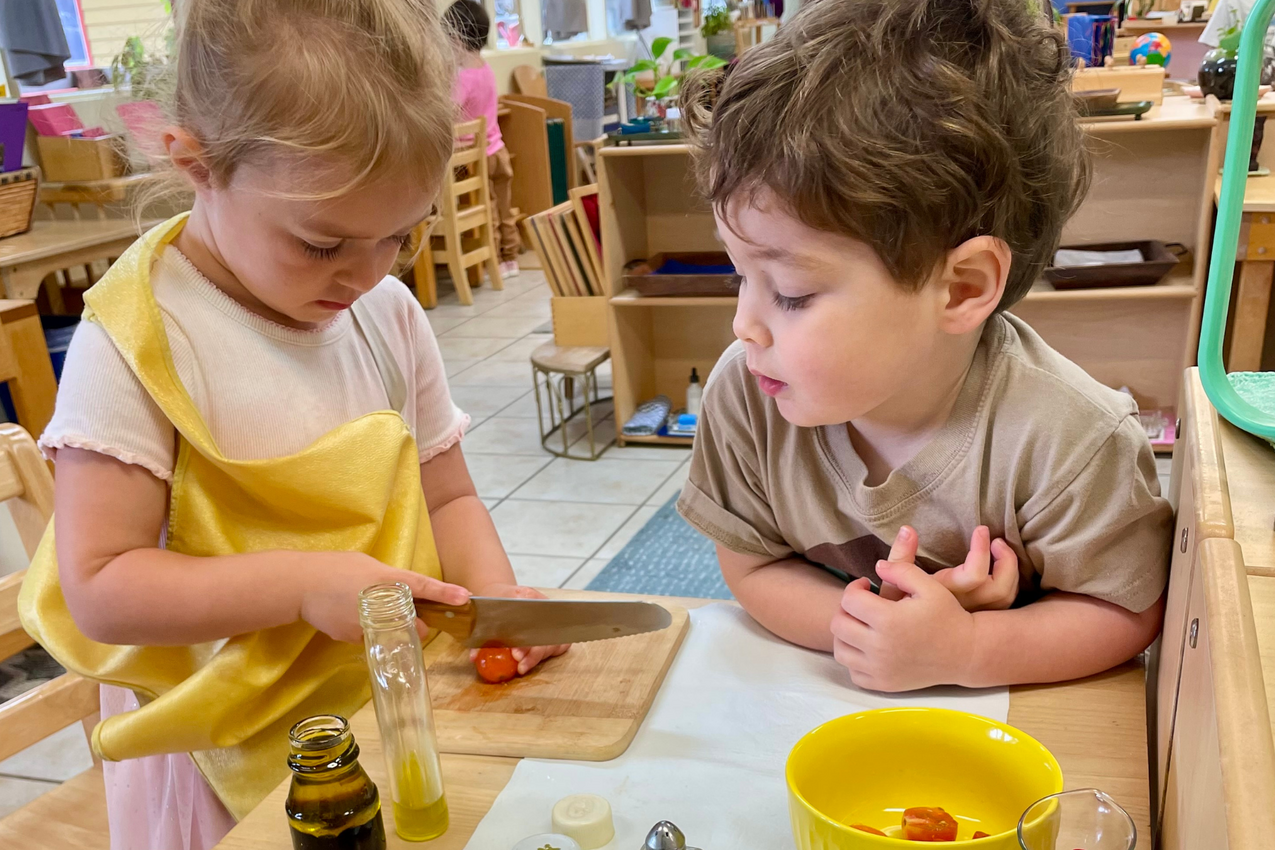
In a traditional classroom setting, you won’t ever see metal polishing, dishwashing, muffin baking, or tile scrubbing available for the children to work with whenever they want. Yet in a Montessori classroom, you'll notice that these activities are an integral part of the environment. To adults, activities such as sweeping the floor, making our beds, cooking dinner, and bathing ourselves are often seen as tiresome and routine tasks. We focus on the most efficient and effective ways to get them done, and even give ourselves a pat on the back when we find new ways to make our everyday tasks seem a little more bearable. Children, however, are fulfilled by the process of doing these activities, not by the results of them, or if they are able to get them done quickly. Dr. Montessori wrote, “It is evident that the child carries out these actions not with the same aim that adults have, which is to clean the vessel, but with another aim, an inner aim, which compelled him to carry out these actions so as to exercise himself.” For the child, these processes and activities are not mundane or tedious; they are life-giving and support the child in developing self-confidence, responsibility, and functional independence.
Over many years of observation, Dr. Montessori noticed that children were happiest and most connected to their environment when engaged in real-life, everyday activities. Practical life activities not only aid children in gaining their functional independence - we all know that Montessorians are all about fostering independence but they also let a child become a part of the classroom community by playing a role in the maintenance and beauty of their environment. Children learn how important the upkeep of their environment is and eventually take pride in it. I once heard a child tell another child, “You can see yourself in the mirror better because I polished it for you,” and the other child graciously thanked them for their hard work. While setting the tables for lunch, children will even correct one another if a spoon or a cup has been placed in the wrong area because they want the tables to look as neat as possible. After a while, if you sit back and observe the environment, you will see that at some point every child in a Montessori classroom has done something to keep their classroom beautifully maintained, whether it be as little as picking up a piece of paper that fell on the floor, or as big as starting a table scrubbing party with their friends because they noticed crayon or pencil markings on a few tables.
So, if practical life activities can be practiced at school, can they also be practiced at home? Yes, of course! And we encourage it! With a little bit of time and patience, your child can help with some of the “tiresome and routine tasks” stated in the first paragraph and even take on some of their own. Whether you call them chores, family contributions, or home jobs, these activities make your child feel like an essential member of their household. You also don’t need to change the flow of your house or add any special areas for your child to participate in household activities. Here are some examples:
- Sweeping helper: while you’re sweeping the floors, have your child grab a hand broom and dustpan and sweep up any piles you make around the house.
- Setting the table for meals: if your child cannot reach into the cupboards, the adult can bring down the dishes to a level where the child can reach them beforehand.
- Helping pack their lunch for school: for a younger child, this can look like pre-peeling their orange and putting it in a container or spreading their own sunflower butter and jelly on bread for sandwiches.
- Feeding and watering pets: show your child where the food is stored and how much to serve your pet. After a few practice runs, you can eventually let them fully take over that responsibility.
These are just a few of the many ways you can implement practical life activities at home with your child.. These moments not only nurture their confidence and skills but also instill a sense of responsibility. Embrace these opportunities for learning and connection, and watch your child thrive in their environment.
Written by Lyrik Lopez, Red Cedar Children's House Guide